

News
EPJ A Highlight - Nuclear physics with a medium-energy Electron-Ion Collider
- Details
- Published on 21 October 2012
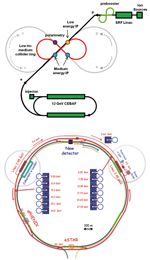
Quarks and gluons are the fundamental constituents of most of the matter in the visible Universe; Quantum Chromodynamics (QCD), a relativistic quantum field theory based on color gauge symmetry, describes their strong interactions. The understanding of the static and dynamical properties of the visible strongly interacting particles - hadrons - in terms of quarks and gluons is one of the most fascinating issues in hadron physics and QCD. In particular the exploration of the internal structure of protons and neutrons is one of the outstanding questions in experimental and theoretical nuclear and hadron physics. Impressive progress has been achieved recently.
EPJ E Highlight - Scaling up polymer blobs
- Details
- Published on 21 October 2012

Several new simulations performed on polymers outline their scaling-up behaviour at extreme limits where it depends on their density and length.
Scientists use simulations to test the limits of their object of study—in this case thin films of polymers—to extremes of scale. In a study just published in EPJ E, Nava Schulmann, a researcher at Strasbourg University, France, and colleagues use a well-known model capable of providing information on heat and mechanical energy exchange between these polymer chains. They found that polymer blends confined to ultrathin two-dimensional films displayed enhanced compatibility. This was made possible by simulations using a fairly standard model, which is simple enough to allow the efficient computation of dense large-chain systems.
EPJ B Colloquium - Heat flux anomaly at nanoscale
- Details
- Published on 21 October 2012
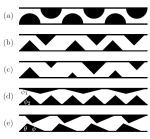
Nanomaterials are promising platforms for testing fundamental heat transport theories, according to a recent review outlining anomalous heat transport in nanometric scale materials.
The latest developments in experimental, theoretical and numerical studies of heat conduction have recently been published in EPJB. A review article by Singaporean and Chinese experts indicates that the standard laws governing conduction at macroscopic scale no longer apply in nanostructures. Instead, thermal conductivity is dependent on the material scale. Heat transport in nanoscale materials has implications in electronic, optoelectronic, and thermal devices.EPJ E Highlight - Self-forming biological scaffolding
- Details
- Published on 21 October 2012
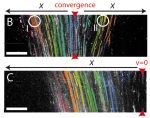
A model system that can interpret the role of cross-linking proteins.
A new model system of the cellular skeletons of living cells is akin to a mini-laboratory designed to explore how the cells’ functional structures assemble. A paper just published in EPJ E by physicist Volker Schaller and his colleagues from the Technical University Munich, Germany, presents one hypothesis concerning self-organisation. It hinges on the findings that a homogeneous protein network, once subjected to stresses generated by molecular motors, compacts into highly condensed fibres.
EPJ E Colloquium – From shear banding to elastic turbulence
- Details
- Published on 21 October 2012
A new model provides an alternative description of atomic level gold bonding.
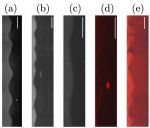
While simple Newtonian liquids are structured at the molecular scale, complex fluids are structured at the mesoscopic scale. Shear-banding is a ubiquitous phenomenon in complex fluids. It relates to the formation of regions (bands) with different fluidities and stacked along the velocity gradient direction. Shear banding is a transition towards a heterogeneous state induced by the flow itself. It’s been observed in many systems of practical relevance, including giant (wormlike) micelles, telechelic polymers, emulsions, clay suspensions, colloidal gels, star polymers, granular materials, or foams. Giant micelles, the subject of a recent EPJE Colloquium,EPJ B Highlight - Angling for gold
- Details
- Published on 21 October 2012
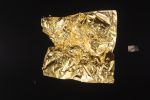
A new model provides an alternative description of atomic level gold bonding.
A study on how gold atoms bond to other atoms using a model that takes into account bonds direction has been carried out by physicist Marie Backman from the University of Helsinki, Finland, and colleagues. These findings, which have just been published in EPJB, are a first step toward better understanding how gold binds to other materials through strong, so-called covalent, bonds.
EPJ B Colloquium - Statistical physics for micro-scale fracture and plasticity
- Details
- Published on 21 October 2012
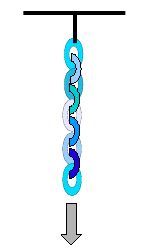
A review of recent successes and outstanding challenges for statistical physicists working on the mechanical properties of materials.
Most of the complexity in fracture and plasticity stems from the interplay between long-range elastic interactions and structural disorder. Statistical physicists have developed a full machinery of analytical and numerical methods to tackle these problems. Concepts drawn from percolation, fractal geometry, phase-transitions and interface depinning have been used, with varying degrees of success, to understand these problems. In this EPJB colloquium, Stefano Zapperi highlightsEPJ Plus Highlight – Statistical uncertainty in line shift and width interpretation
- Details
- Published on 21 October 2012
EPJ Data Science Highlight - Twitter data crunching: the new crystal ball
- Details
- Published on 21 October 2012
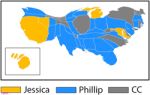
Scientists have devised a means to predict the outcome of election-based processes such as TV talent shows through the big data analysis of tweets.
Fabio Ciulla from Northeastern University, Boston, USA, and his colleagues demonstrated that the elimination of contestants in TV talent shows based on public voting, such as American Idol, can be anticipated. They unveiled the predictive power of microblogging Twitter signals—used as a proxy for the general preference of an audience—in a study recently published in EPJ Data Science.
EPJ D Highlight - Plasma screens enhanced as disorder strikes
- Details
- Published on 21 October 2012

Study looks at ways to improve the quality of matter akin to that found in plasma screens by dissolving its self-organised hexagonal filament structures made of electric discharge.
A new study improves our understanding of plasma sources, a state of matter similar to gas in which a certain portion of the particles are ionised and which are used for example in plasma display panels. These results revealed by physicists from the University of Greifswald, Germany, Robert Wild and Lars Stollenwerk, and are about to be published in EPJD.
Subcategories
Topical Collections
Open calls for papers
-
EPJ AM Call for papers: Themed Issue on Global Advances in Electromagnetic Metasurfaces for Space
(EPJ AM)
-
Call for papers : Special Issue on Imaging, Diffraction, and Spectroscopy on the micro/nanoscale
(EPJ AP)
-
EPJ C Topical Collection on String theory predictions for astroparticle and collider physics, and beyond
(EPJ C)